 by
by Walking is one of the most natural human movements. It is often recommended as a low-impact form of exercise that supports cardiovascular health, maintains joint mobility, improves mental well-being, and helps people stay active throughout life. However, not all walking environments are equal. Many people discover that a walk on a smooth indoor floor feels comfortable, while the same distance on a rocky trail, uneven sidewalk, cobblestone street, or grassy field leads to significantly more pain.
This experience is not simply a matter of personal preference. Uneven surfaces place unique demands on muscles, joints, tendons, ligaments, and the nervous system. For individuals already dealing with chronic pain, arthritis, injury recovery, balance problems, or muscle weakness, these additional demands can transform a pleasant walk into a painful experience.
Understanding why uneven surfaces increase walking pain can help individuals make better decisions about activity levels, footwear, rehabilitation strategies, and pain management. It can also provide reassurance that increased discomfort on challenging terrain does not necessarily indicate worsening disease or injury.
The Hidden Complexity of Walking
Walking may appear effortless, but it is actually a highly coordinated process involving multiple body systems working together.
Every step requires:
- Joint movement in the hips, knees, ankles, and feet
- Muscle contractions for stability and propulsion
- Continuous balance adjustments
- Sensory feedback from the feet
- Coordination between the brain and body
- Weight transfer from one leg to the other
When walking on a flat, predictable surface, the body develops an efficient rhythm. The nervous system learns exactly how much force and movement are required for each step.
Uneven surfaces disrupt this rhythm. Every step becomes slightly different, forcing the body to constantly adapt. These repeated adjustments increase physical stress and energy expenditure, often leading to pain.
What Counts as an Uneven Surface?
Many people immediately think of hiking trails when they hear the term uneven surface, but uneven terrain exists in many everyday environments.
Examples include:
- Cracked sidewalks
- Cobblestone streets
- Gravel pathways
- Grass lawns
- Dirt trails
- Rocky terrain
- Sand
- Sloped driveways
- Uneven pavement
- Construction zones
- Worn flooring
- Root-covered paths
Even small height differences can significantly affect walking mechanics, especially for people who already have pain or mobility limitations.
Increased Joint Loading
One major reason uneven surfaces increase walking pain is that they alter how forces travel through the body.
On level ground, weight is distributed relatively evenly. The joints absorb predictable loads during each step.
On uneven terrain:
- Forces become less predictable
- Weight shifts unexpectedly
- Certain joints absorb more impact
- Muscles work harder to maintain alignment
This increased loading often affects:
The Ankles
The ankle serves as the body’s first line of adaptation to uneven terrain.
When stepping on an irregular surface, the ankle must rapidly adjust to:
- Side-to-side tilting
- Unexpected slopes
- Variable ground heights
These constant adjustments can irritate:
- Tendons
- Ligaments
- Joint surfaces
- Previously injured tissues
People with ankle instability often experience increased pain when walking on uneven ground because their joints already struggle to maintain proper control.
The Knees
The knees rely heavily on proper alignment from the feet and ankles.
When uneven surfaces alter foot positioning, knee mechanics may change.
This can lead to:
- Increased pressure on cartilage
- Greater stress on ligaments
- Irritation of surrounding tissues
- Muscle fatigue
Individuals with osteoarthritis frequently notice worsening symptoms on rough terrain because the knee must absorb more unpredictable forces.
The Hips
Hip muscles play a crucial role in stabilizing the body during walking.
Uneven surfaces increase demands on:
- Gluteal muscles
- Hip stabilizers
- Pelvic control mechanisms
When these muscles become fatigued, hip pain may develop or existing symptoms may worsen.
Greater Muscle Activity
Research consistently shows that uneven terrain requires more muscle activation than smooth surfaces.
Muscles must work harder to:
- Maintain balance
- Correct foot placement
- Absorb impact
- Control body movement
This increased workload can contribute to pain in several ways.
Muscle Fatigue
Fatigued muscles provide less support to joints.
As muscles tire:
- Joint stability decreases
- Movement efficiency declines
- Pain sensitivity may increase
A person who can comfortably walk for thirty minutes on a flat path may develop significant discomfort after only fifteen minutes on uneven terrain.
Trigger Point Activation
Muscles under prolonged stress may develop painful knots known as trigger points.
Common areas include:
- Calves
- Hamstrings
- Gluteal muscles
- Lower back muscles
These trigger points can produce localized pain or referred pain that spreads to nearby regions.
Balance Challenges and Pain
Balance is constantly challenged when walking on irregular surfaces.
The body uses information from:
- Vision
- Inner ear structures
- Muscles and joints
- Foot pressure receptors
Uneven terrain requires rapid processing of this information.
For individuals with:
- Aging-related balance decline
- Neuropathy
- Vestibular disorders
- Previous injuries
the effort required to stay upright can significantly increase pain levels.
The nervous system essentially remains on high alert throughout the walk, increasing muscle tension and energy expenditure.
Foot Mechanics Become More Demanding
The feet contain dozens of bones, joints, muscles, and ligaments designed to adapt to changing surfaces.
While this adaptability is beneficial, it also means uneven terrain creates greater stress.
Common foot-related problems include:
- Plantar fasciitis flare-ups
- Arch strain
- Metatarsal pain
- Heel pain
- Tendon irritation
Repeated adaptation to irregular ground may aggravate existing foot conditions and create new discomfort.
Increased Risk of Microtrauma
Microtrauma refers to tiny amounts of tissue stress that accumulate over time.
A single step on an uneven surface may not cause noticeable injury.
However, thousands of steps can create:
- Minor tendon irritation
- Small muscle strains
- Joint inflammation
- Soft tissue stress
This cumulative effect often explains why pain appears hours after a walk rather than during the activity itself.
Why Arthritis Symptoms Often Worsen
People with arthritis frequently report greater pain when walking on uneven surfaces.
Several factors contribute to this phenomenon.
Joint Surface Irregularities
Arthritic joints already have compromised cartilage.
Uneven terrain introduces:
- Sudden loading changes
- Twisting motions
- Increased compression
These stresses may irritate sensitive joint structures.
Reduced Shock Absorption
Healthy cartilage helps absorb impact.
When cartilage deteriorates, the body’s ability to handle unpredictable forces decreases.
As a result, rough surfaces may produce more pain than smooth pathways.
Muscle Guarding
Pain often causes protective muscle tightening.
This guarding response can limit movement efficiency and increase fatigue, creating a cycle of discomfort.
Nerve-Related Pain Can Intensify
Individuals with nerve-related conditions often find uneven surfaces particularly challenging.
Examples include:
- Sciatica
- Peripheral neuropathy
- Lumbar nerve irritation
- Post-surgical nerve sensitivity
Several mechanisms may contribute.
Increased Nerve Tension
Changing terrain alters body positioning.
These positional changes may increase tension along irritated nerves, triggering symptoms.
Sensory Overload
Nerves provide constant information about surface texture and foot position.
Uneven ground increases sensory input, which may amplify pain in sensitive nervous systems.
The Role of Fear and Anticipation
Pain is not solely a physical experience.
Psychological factors also influence symptom intensity.
When walking on uneven terrain, many people worry about:
- Falling
- Twisting an ankle
- Triggering pain
- Reinjuring a body part
This anticipation can increase:
- Muscle tension
- Stress hormones
- Pain awareness
As a result, discomfort may feel more intense than expected based solely on tissue stress.
Why Older Adults Often Experience More Pain
Aging naturally affects movement and balance.
Common age-related changes include:
- Reduced muscle strength
- Slower reaction times
- Decreased flexibility
- Diminished sensory feedback
These changes make adapting to uneven terrain more difficult.
Older adults may therefore experience:
- Earlier fatigue
- Greater joint stress
- Increased pain levels
This does not mean walking should be avoided. Instead, it highlights the importance of choosing appropriate environments and gradually building tolerance.
Footwear Matters More Than Many People Realize
Footwear can significantly influence how the body handles uneven surfaces.
Supportive shoes help:
- Distribute pressure
- Improve stability
- Reduce excessive foot motion
- Enhance shock absorption
Poor footwear may increase stress on:
- Feet
- Ankles
- Knees
- Hips
Characteristics of helpful walking shoes often include:
- Adequate cushioning
- Stable heel support
- Proper fit
- Good traction
Worn-out shoes may contribute to increased discomfort, even if they once felt comfortable.
How Surface Types Affect Pain Differently
Different terrains challenge the body in unique ways.
Gravel
Gravel shifts underfoot, requiring constant stabilization.
Common complaints include:
- Ankle fatigue
- Foot soreness
- Balance-related tension
Sand
Walking on sand demands significant muscle effort.
Pain often develops in:
- Calves
- Achilles tendons
- Feet
Grass
Grass may appear soft but often hides uneven ground.
Unexpected dips and bumps increase joint stress.
Cobblestones
Cobblestone surfaces force continuous adjustments in foot placement.
Many individuals report:
- Foot pain
- Knee discomfort
- Lower back strain
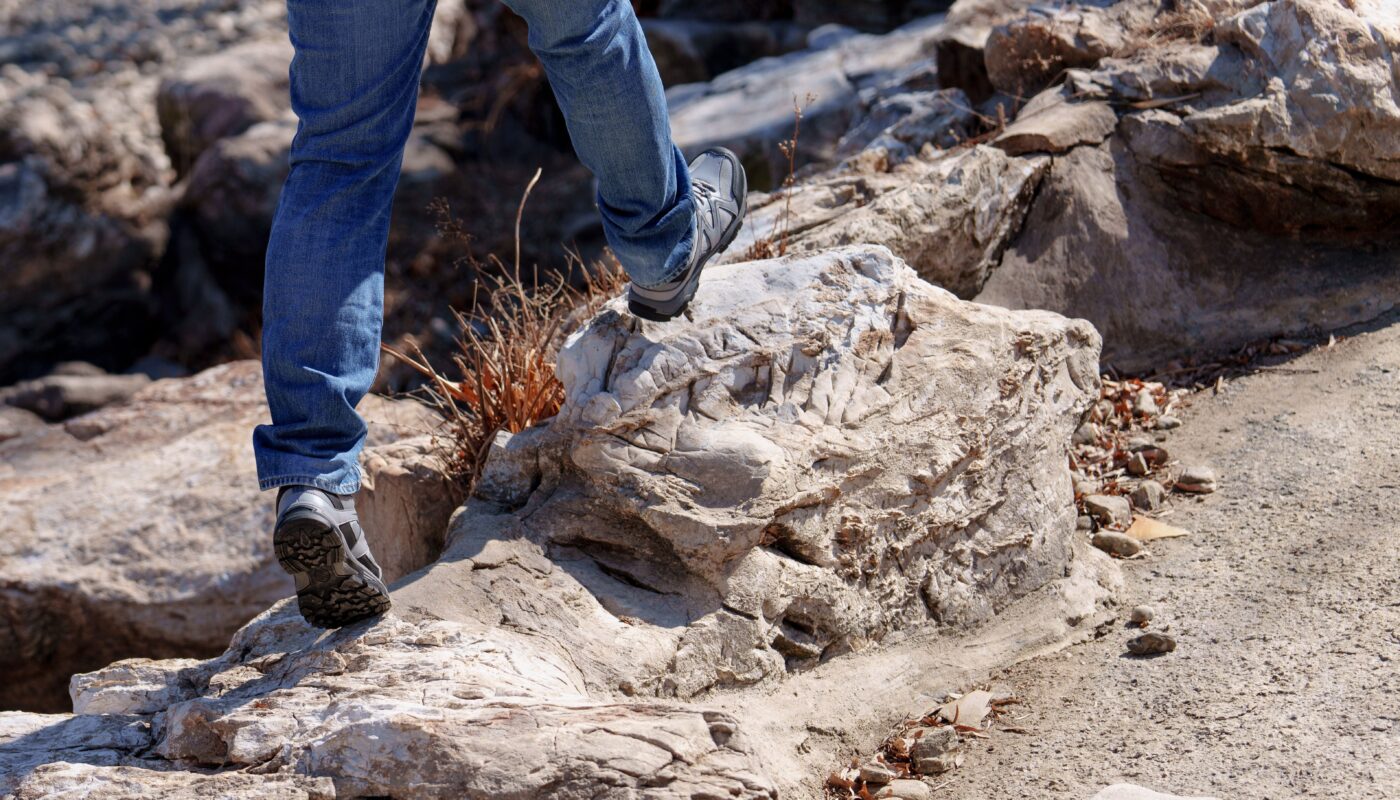
Rocky Trails
Rocky terrain combines balance demands, impact variation, and irregular foot positioning.
This makes it one of the most physically demanding walking surfaces.
The Connection Between Fatigue and Pain
Fatigue and pain often reinforce one another.
As fatigue develops:
- Movement quality declines
- Stability decreases
- Joint stress increases
This increased stress may trigger more pain.
Pain then causes altered movement patterns, creating additional fatigue.
Breaking this cycle is an important goal of rehabilitation and pain management.
Why Pain May Appear Later
Many people notice that uneven terrain causes delayed symptoms.
Several factors explain this pattern.
Inflammatory Response
Minor tissue stress can trigger inflammation that develops gradually over several hours.
Muscle Recovery Demands
Overworked muscles may become sore after activity ends.
Nervous System Sensitization
The nervous system may remain activated after prolonged exposure to physical stress.
As a result, discomfort may peak later in the day or the following morning.
Strategies to Reduce Walking Pain on Uneven Surfaces
Although uneven terrain can increase discomfort, several practical approaches may help.
Build Exposure Gradually
Avoid sudden increases in terrain difficulty.
Progression might include:
- Indoor walking
- Smooth outdoor paths
- Slightly uneven surfaces
- Moderate trails
- Challenging terrain
Gradual adaptation allows tissues to strengthen over time.
Strengthen Supporting Muscles
Targeting key muscle groups improves stability.
Important areas include:
- Gluteal muscles
- Quadriceps
- Calves
- Core muscles
Stronger muscles help distribute forces more effectively.
Improve Balance
Balance exercises can enhance confidence and movement efficiency.
Examples include:
- Single-leg standing
- Heel-to-toe walking
- Controlled weight shifting
Improved balance often reduces pain associated with instability.
Use Appropriate Footwear
Choose shoes suited to the environment.
Trail shoes may offer advantages on rough terrain because they provide:
- Better grip
- Improved stability
- Enhanced protection
Pace Yourself
Alternating periods of activity and rest can prevent excessive fatigue.
Walking until pain becomes severe often leads to longer recovery periods.
Monitor Surface Choices
Whenever possible, select routes that match your current abilities.
A smoother path may allow longer and more enjoyable walks without excessive discomfort.
When Walking Pain Should Be Evaluated
Although some increase in discomfort on uneven surfaces is common, certain symptoms warrant medical evaluation.
Seek professional assessment if pain is:
- Severe
- Progressively worsening
- Associated with swelling
- Accompanied by weakness
- Linked to frequent falls
- Causing significant mobility limitations
Persistent symptoms may indicate an underlying condition requiring targeted treatment.
The Importance of Staying Active
Experiencing pain on uneven surfaces does not automatically mean activity should stop.
Avoiding movement entirely can lead to:
- Muscle weakness
- Joint stiffness
- Reduced endurance
- Greater long-term disability
The goal is usually to find a manageable level of activity that supports health without causing excessive symptom flare-ups.
Many people benefit from a balanced approach that combines:
- Walking
- Strength training
- Flexibility exercises
- Recovery periods
This strategy often improves function while reducing pain over time.
Conclusion
Uneven surfaces increase walking pain because they place greater demands on nearly every system involved in movement. The feet, ankles, knees, hips, muscles, and nervous system must constantly adapt to unpredictable terrain. These adjustments increase joint loading, muscle activity, balance requirements, and overall physical stress.
For individuals living with arthritis, chronic pain, nerve irritation, previous injuries, or age-related mobility changes, the effects can be especially noticeable. Pain may arise during activity or appear hours later as tissues respond to accumulated stress.
Fortunately, increased discomfort on uneven terrain does not always indicate serious damage. Understanding the reasons behind these symptoms allows people to make informed decisions about footwear, exercise progression, strength training, balance development, and route selection. By approaching uneven surfaces thoughtfully and building resilience gradually, many individuals can continue walking safely, comfortably, and confidently while maintaining the many physical and mental health benefits that regular movement provides.
Sources
National Institute of Arthritis and Musculoskeletal and Skin Diseases (NIAMS), Centers for Disease Control and Prevention (CDC), National Institute on Aging (NIA), American Academy of Orthopaedic Surgeons (AAOS), Arthritis Foundation, Harvard Health Publishing, Mayo Clinic, Cleveland Clinic